Little Nightmares is a series of 2.5D puzzle-platformer horror games where you play as small kids who are badly outmatched, sneaking through worlds built for monsters. Everything is oversized, from the rooms to the creatures that live in them. The first two games have no HUD and very little hand-holding. You run, jump, hide and try not to get caught. The stories come in fragments and dream logic, so if you need a clear plot with a neat resolution, this series isn't it. But if you like atmospheric horror, grotesque monsters and tense chases, it's a good place to be!
I've reviewed all three games: Little Nightmares, Little Nightmares II and Little Nightmares III. This guide puts them side by side so you can decide where to jump in. It's spoiler-free, and I'm deliberately not saying anything about how the stories connect, because that's worth discovering yourself. Every game is scored on the site's nine game facets from 1 to 5, plus an overall rating from 0 to 5 that starts from the facets and ends with my call on the whole experience. You can read more about how games are reviewed.
If you've played Limbo or Inside, you already know the neighborhood. These games are also forgiving enough for a casual player like me, and I mostly play in short sessions. All three involve violence and the endangerment of children, and the second and third add body horror, so go in knowing that. All three are tagged survival horror on the site.
Where to start
Start with the first game and play them in release order. It's the shortest at about three to six hours, it has the simplest controls, and it shows you exactly what the series is about. The second game is built as a bigger, bolder version of the first. I called it a leveling up of everything that worked, and I'd recommend it to anyone who enjoyed the original, since it builds directly on what that game does.
The third game is different. It comes from a new studio and feels more like a reboot than a continuation, so it helps to have played the first two and know you're getting a change of direction.
Little Nightmares (2017)
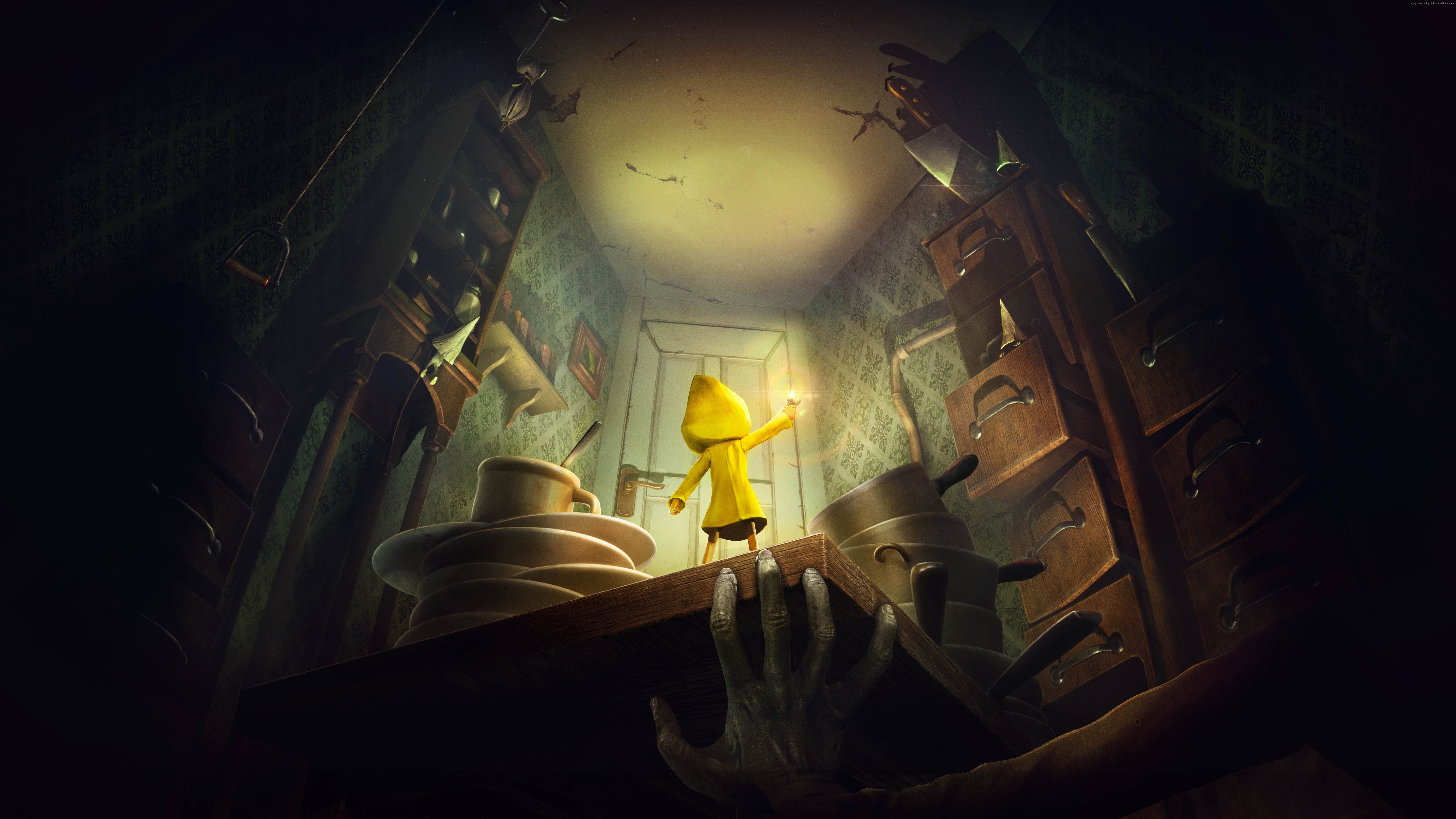
Overall: 4.5. This is the original, from Tarsier Studios. You play Six, a tiny girl in a yellow raincoat, trying to escape a huge, grotesque ship called the Maw. You can run, jump, grab, crouch and use a lighter. That's it, and the simplicity is the point, because nothing ever pulls you out of the nightmare.
What it does best is atmosphere and monsters. The stop-motion look is like a dark children's book, and the sound design does a lot of the heavy lifting. I played with headphones and recommend you do too. The Janitor is blind, with impossibly long arms, and creeping past him in the library without making a sound was one of my favorite moments in the game. The game also escalates nicely, from quiet claustrophobic rooms to frantic chases.
What didn't land for me entirely was the story, which barely exists, and the lack of guidance. If you put it down for a couple of weeks, you may forget what you were doing, but as a fairly linear game, it doesn't take much to get back into it. A few long chase sequences also push the checkpoints, and I could have used more subtle background noise to fill some of the silence.
It's for fans of atmospheric horror who don't need answers. It's not for you if you need a clear narrative or want to fight back.
- Atmosphere & Sound Design: 5.0
- Enemy/Monster Design: 5.0
- Story & Narrative: 3.0
Read the full review of Little Nightmares.
Little Nightmares II (2021)
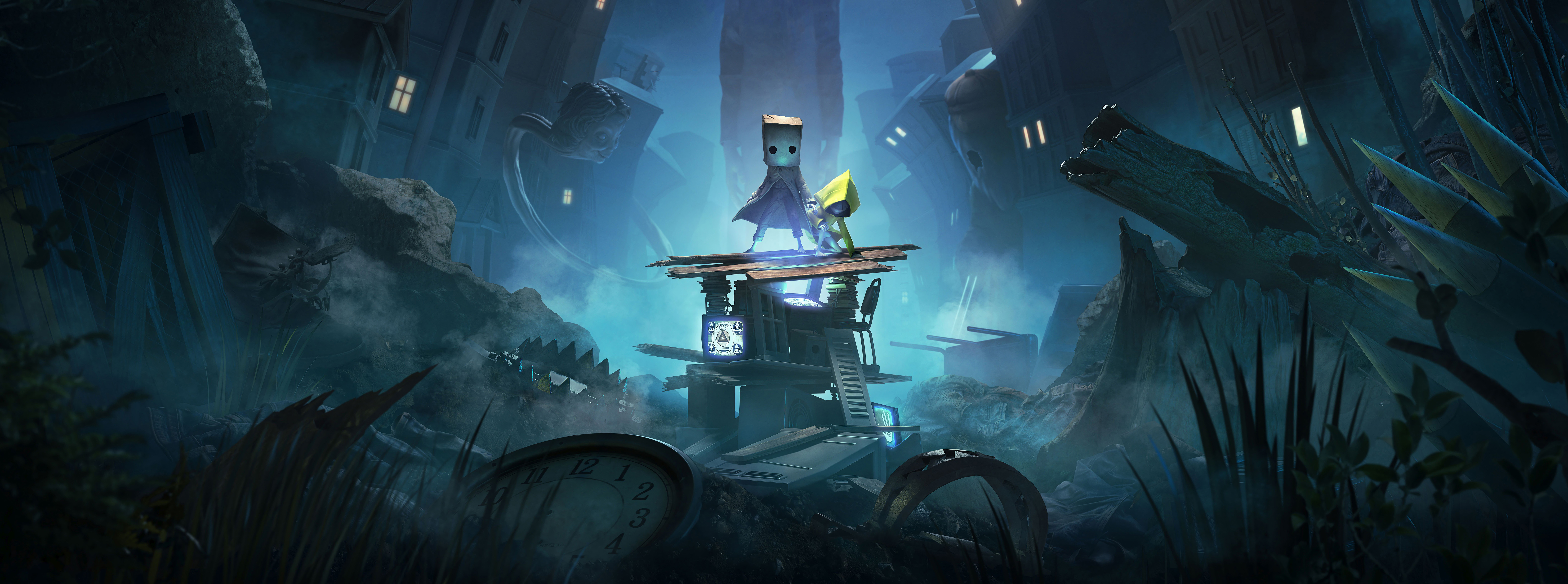
Overall: 4.5. Also from Tarsier, this one follows Mono, a boy with a paper bag over his head, through a decaying world called the Pale City. Six, the character from the first game, is back too. It runs about six hours.
It adds a couple of things, and both work. Combat is used sparingly, as a timing puzzle rather than a brawl, and every hit feels violent. The flashlight is now a defense, because it freezes certain enemies. I found the game scarier, darker and more grotesque than the first, and I loved that it pushed harder. The hospital, with its mannequins, was my favorite part and gave me serious Silent Hill vibes. The sound design is top-notch, from the Hunter's shotgun blasts to the sound of the Teacher's neck stretching around corners.
My main complaint is that almost every chapter ends in a big chase, so you notice the pattern. The Doctor is also the weakest of the monsters, more ugly than scary. The story is vague and dreamlike, which suits the series. Hardcore gamers may also find it a bit easy.
If you liked the first game, you should definitely play this one. It's also simple enough that even casual gamers can get a lot out of it.
- Fear Factor & Tension: 5.0
- Enemy/Monster Design: 5.0
- Difficulty & Challenge Design: 3.0
Read the full review of Little Nightmares II.
Little Nightmares III (2025)
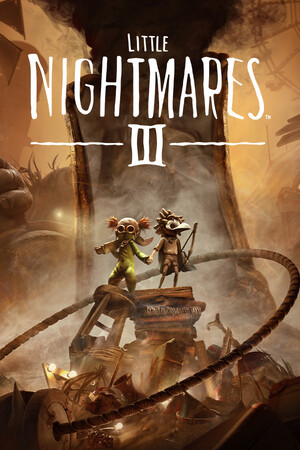
Overall: 3.0. This is the one from a different developer, Supermassive Games. Two new kids, Low and Alone, make their way through a place called the Nowhere, with a bow and a wrench as their tools. It's built for co-op, but I played solo with a computer-controlled partner.
The environments are the best part. The four settings (the Necropolis, the Candy Factory, the Carnevale and the Institute) are huge, detailed and creative, and the Carnevale is my favorite, with ventriloquist dummies that were the scariest part of the game. Monster Baby's introduction is a great moment, and the sound design finally added the random ambient noises I'd wanted in the first two games. I was also surprised by how gory it got.
But it didn't quite land because the rounded, plush, animated look softens everything. It's an animated horror movie that I could admire, but without ever being scared. The levels are long enough to wear you out, the co-op is online-only with no couch option, and the partner didn't add much when I played alone. Combat is also more present, which nudges it toward action-adventure more than its predecessors.
It's for fans of 2.5D platformers like Inside, Limbo and Cocoon. But it's not for you if you want more of the dread from the first two.
- Atmosphere & Sound Design: 4.0
- Visual Design & Art Direction: 2.0
- Fear Factor & Tension: 2.0
Read the full review of Little Nightmares III.
Which one is scariest?
Little Nightmares II. Here's how the three compare on the facets that matter most for scares.
Fear Factor & Tension:
- Little Nightmares: 4.0
- Little Nightmares II: 5.0
- Little Nightmares III: 2.0
Atmosphere & Sound Design:
- Little Nightmares: 5.0
- Little Nightmares II: 5.0
- Little Nightmares III: 4.0
Enemy/Monster Design:
- Little Nightmares: 5.0
- Little Nightmares II: 5.0
- Little Nightmares III: 3.0
The first game is unsettling and immersive. As a longtime horror fan, I appreciated it more than I was frightened by it. The second game is where I felt real fear, especially in the hospital and the final escape. The third has a great monster introduction and a very creepy Carnevale, but the art style kept me at arm's length, so it never truly scared me.
Is Little Nightmares III worth it?
Yes, with the right expectations. I scored it 3.0, and I called it a good game that's also a bit of a disappointment. I didn't even know the studio had changed until after I'd played it, but the shift was obvious from the first few minutes. If you loved the first two for their oppressive dread and grotesque atmosphere, you'll probably be let down.
If you just like atmospheric 2.5D platformers and don't need the game to be scary, it's absolutely worth playing. The worlds are impressive, the sound is good and the Carnevale is a highlight. I'd say try the first level and see if it grabs you. It feels like a line in the sand for the series, and I'm curious where it goes next.
If you liked Little Nightmares
Try Still Wakes the Deep, which I scored 4.5. It isn't a 2.5D game. It's a narrative horror game set on a sinking Scottish oil rig in the 1970s, and its creatures draw from The Thing. But the helplessness reminded me of the first Little Nightmares. You can't fight, so you run, hide, climb and dive underwater. It's also best with headphones, it runs about six hours, and it plays like a sci-fi horror movie.