INSIDE
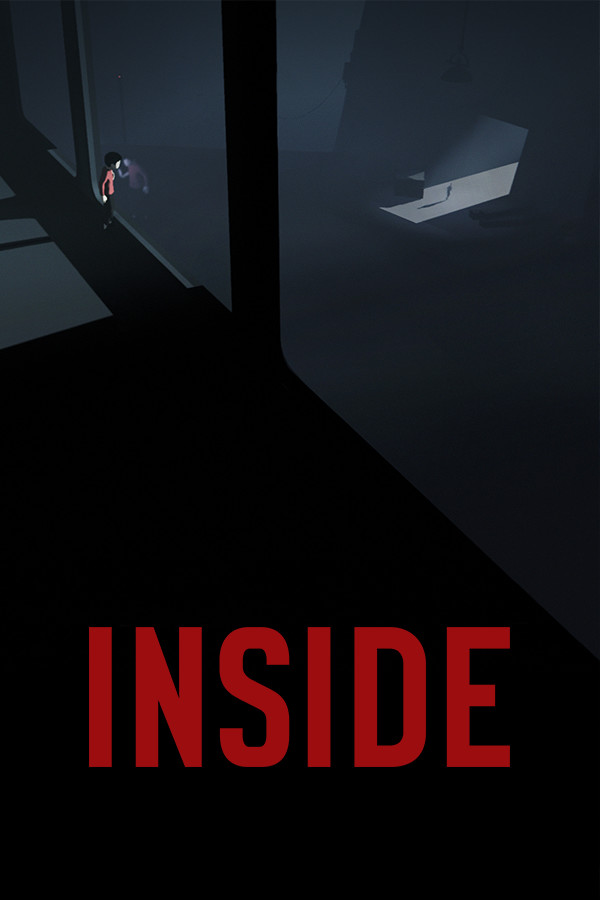
A minimalist 2.5D puzzle-platformer where a young boy must navigate a bleak, hostile, and dystopian world while being hunted by oppressive forces.
Horror Elements at a Glance
A wordless dystopia that earns its dread through silence, scale, and one unforgettable boom
Playdead’s Inside (2016) is a game that drops you into silence, shadow, and dread without a word of explanation. It’s a 2.5D side-scrolling puzzle platformer that builds its horror, not through gore or jump scares, but through atmosphere, tone, and the sheer wrongness of the world it places you in.
The game follows an unnamed boy running through a bleak, wordless dystopia, slipping past guards, dogs, and hazards as he’s drawn deeper into a dark, expansive world. What begins in a forest quickly spirals into farmland, underwater ruins, and a sprawling industrial facility, each space more sinister than the last. The result is one of the most memorable horror experiences I’ve ever played.
A Brief Stint in Limbo
My history with Playdead was minimal before this, so I didn’t come into it with much baggage or expectations. I had briefly booted up Limbo years earlier, but never really gave it a chance, so Inside was one of my first real experiences with the 2.5D horror-platformer style (before Little Nightmares came along and solidified the genre for me!).
The tone connected immediately: isolated, dreary, dreadful. You’re dropped in with no instructions and no information. You start moving, and you go, and it grounds the horror instantly.
Muted Concrete and Living Shadows
The visual presentation completely separates Inside from the flat, silhouette puppet style of Limbo. Playdead uses a subdued, realistic color palette where every pale beam of light, damp forest floor, and concrete slab feels tangible and sinister. The world feels massive and intimidating without ever sliding into surreal caricature or cartoonish visuals. You are just a tiny, fragile figure moving through cavernous spaces built for something far larger and far colder than a lost child.
As you move from the woods into sprawling factories and strange, submerged laboratories, the sheer scale is breathtaking. You’ll run past enormous machines performing unknown but ominous tasks, and the environmental storytelling is second to none. There is no dialogue. There is no text. The world tells you everything you need to know: you are trespassing, you are fragile, and something is deeply, fundamentally wrong here.
The Sound of Dread
That visual restraint feeds directly into the soundscape, which might be the most compelling decision of the game. There is almost no music here. The sound design relies almost entirely on physical space: wet gravel crunching under sneakers, the dull hum of heavy machinery, ragged breathing, and the sudden snap of branches in the dark. The entire atmosphere behaves like its own character, constant and sinister, refusing to grant a single moment of safety.
One sequence stands above everything else for me: a low repeating boom that starts so faint you can barely hear it, then grows louder the closer you get. It continues building over a long stretch before it finally reveals itself in sheer chaotic glory. It’s not a jump scare and it’s not a boss fight; it’s a slow, perfectly timed swell that I still think about often, and honestly it might be my favorite moment in any game I’ve ever played.
Simple Controls, Sinister Puzzles, and Death
As a casual gamer, I loved that the controls are stripped to the bare essentials. You run, you jump, you interact. That’s it. This minimalism is the game’s greatest strength, allowing the focus to remain on its clever, physics-based puzzles. These challenges never feel like arbitrary roadblocks; they are organic parts of the world you’re trying to survive.
The puzzles are often built around a deeply unsettling mind-control mechanic, which allows you to command the mindless, shambling bodies of others. It’s a perfect marriage of gameplay and theme, making you an active participant in the world’s horror. The synchronization puzzles, where you must mimic the movements of mindless automatons or be killed, are another highlight — tense, immersive, and tonally perfect. The challenges are fair, but the consequences for failure are stark and brutal.
Inside is infamous for its sudden, violent deaths, and they fit the tone perfectly. Dogs rip you apart, underwater creatures drag you down, and industrial hazards blow you to pieces. These deaths are punishing but fair, never cheap or frustrating. They reinforce the horror rather than undercut it, making each retry feel urgent. Death isn’t just failure here; it’s part of the experience, a reminder of how fragile you are in this hostile world.
Endings and Aftermath
Running roughly three to four hours for a standard playthrough, the journey never overstays its welcome or drags into a slog. I took slightly longer on my run because I enjoy hunting achievements, and that concise length made poking around the corners manageable.
My only real gripe involves the hidden orbs required to reach the secret alternate ending. Finding every orb without assistance feels borderline impossible, and I had to consult a walkthrough to clean them up. I honestly don’t know how anyone attempting to track down every secret unassisted would do it without help! Even with the obscurity of that hunt, both endings remain completely true to the game’s bleak vision, and their impact lingers long after it’s all over.
Who Should Step Inside
Inside is an essential experience for anyone who values quiet, dread-soaked environmental horror that respects your intelligence. It is ideal for players who want simple, intuitive controls paired with deep, unsettling imagery and powerful sound design to create an immersive experience. And of course, if you enjoyed Limbo or Little Nightmares and haven’t picked this one up yet, this is a must-play!
However, if you weren’t a fan of those, or need clean narrative exposition, dialogue, or tidy closure, Inside might frustrate you. Similarly, if you want complex combat or dislike ambiguous storytelling, you should probably look elsewhere. This isn’t a game about fighting back; it’s a game about enduring and escaping.
Finally, for me, this remains a title where one playthrough is enough, because the scares rely so heavily on the shock of discovery rather than mechanical depth. I wish Playdead had made a true sequel, because this is one of the best games I’ve ever played, and if I had to pick any game in this genre to return to, this is absolutely the one I would choose.
It stands as a dark, precise masterwork, and gamers looking for pure, unbroken tension should step into its shadows immediately.
Atmosphere & Sound Design
There is almost no music here, just wet gravel, humming machinery, and ragged breathing doing all the work. That slow, perfectly timed boom might be my favorite moment in any game I’ve ever played.
Difficulty & Challenge Design
The puzzles never feel like arbitrary roadblocks, and the deaths are punishing but fair rather than cheap. My one gripe is the hidden orbs — finding them all unassisted feels borderline impossible, and I caved and used a walkthrough.
Enemy/Monster Design
Dogs rip you apart, underwater creatures drag you down, and the shambling automatons are unsettling in a way that stuck with me. Every encounter is a reminder of how fragile you are in this world.
Fear Factor & Tension
The dread is oppressive from the first minute and never once grants you a moment of safety. I only wish it had pushed its boundaries just slightly further than it did.
Pacing & Length
At three to four hours it never overstays its welcome or drags into a slog. It’s tight and memorable, and it left me wanting more.
Gameplay Mechanics
You run, you jump, you interact — that’s it, and that minimalism is the game’s greatest strength. The mind-control puzzles are a perfect marriage of gameplay and theme, and I’d call them a genre best.
Replayability
For me this is a title where one playthrough is enough, because the scares lean so heavily on the shock of discovery rather than mechanical depth. Still, if I had to pick one game in this genre to return to, it would absolutely be this one.
Story & Narrative
No dialogue, no text, and the world still tells you everything you need to know. Both endings stay completely true to that bleak vision even though they leave every question unanswered.
Visual Design & Art Direction
The subdued, realistic palette makes every pale beam of light and concrete slab feel tangible and sinister. The scale is breathtaking — you’re a tiny, fragile figure in cavernous spaces built for something far colder than a lost child.
Official Trailer
About the Reviewer

A lifelong horror fan with a particular obsession with supernatural horror and sci-fi. Josh approaches every review from the perspective of a genuine enthusiast, not a critic, instead asking the questions that actually matter: does it scare you, does it linger, and is it worth your time?